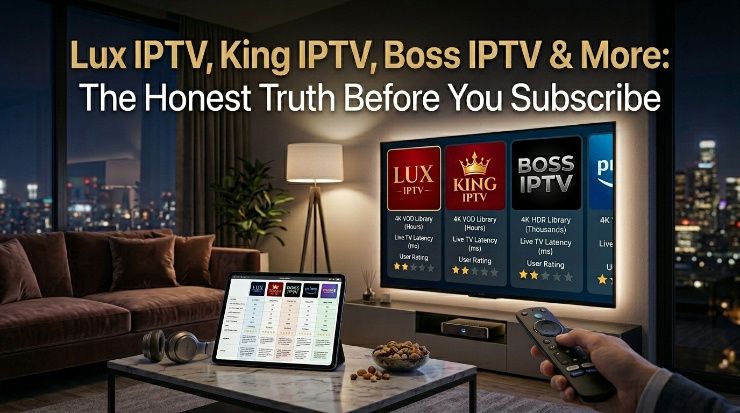
There are a lot of IPTV providers floating around right now, and most of them have names you've probably stumbled across while searching for a reliable service. Lux IPTV, King IPTV, Lemo IPTV, Yeah IPTV, Boss IPTV. You've seen the names. Maybe you've even tried one or two. The problem is that finding honest information about any of them is genuinely difficult because most "reviews" online are either affiliate posts pushing whatever pays the highest commission or forum threads with three replies from 2023.
So let's actually talk about what these services are, what people experience with them, and why so many users end up switching after a few months.
Lux IPTV: What You're Getting
Lux IPTV markets itself as a premium service with a large channel count and multi device support. On paper it sounds solid. In practice, the experience is inconsistent depending on where you are and what time you're watching. Peak hour buffering is a common complaint, particularly during live sports events when the servers are under the most load. The channel list is extensive but stream quality varies significantly between channels, which is frustrating when you're paying for something described as premium.
Support response times are another issue that comes up repeatedly. When something goes wrong with your stream, waiting 24 to 48 hours for a reply is not acceptable if you're in the middle of a game or trying to watch something live. A lot of users stick around for a month or two and then start looking for alternatives once they hit their first major issue.
King IPTV: The Reality Behind the Name
King IPTV has decent brand recognition in the IPTV space, mostly because the name sticks in your head. The actual service is middle of the road. The channel lineup covers the basics and the VOD library is reasonable, but nothing about it stands out as genuinely impressive. Users report that it works well enough when it works, but stability issues crop up regularly, especially on weekends when traffic spikes.
The pricing is competitive, which is probably why it retains users longer than some alternatives. But competitive pricing means very little if you're spending half your evenings waiting for streams to reconnect. For casual viewers who don't mind occasional interruptions, it might be fine. If you're serious about your streaming setup, the inconsistency gets old fast.
Lemo IPTV: Smaller Name, Similar Problems
Lemo IPTV is less well known than some of the others on this list but still pulls in a fair amount of search traffic from people who've heard about it through word of mouth. The service is functional but basic. The interface is straightforward, the channel list is decent for the price, and setup is reasonably simple across most devices.
Where it falls short is in the details. EPG data, which is the electronic program guide that shows you what's on and what's coming up, is unreliable on a lot of channels. For people who like to plan what they're watching or record content, this is a real problem. Stream quality on international channels is also hit or miss, which matters if that's part of why you're subscribing to an IPTV service in the first place.
Yeah IPTV: Does It Live Up to the Hype
Yeah IPTV has a bit of a cult following in certain corners of the internet, with users who swear by it and others who had a completely different experience. This kind of split opinion is usually a sign that server quality varies by region, which is exactly what seems to be happening here. Users in some areas report smooth, reliable streams while others deal with constant issues on the same plan.
The trial process for Yeah IPTV is more complicated than it should be, which is a red flag in itself. A service that makes it difficult to test before you buy is one that knows the test might not go well. That said, users who land on a good server tend to stick around, so your experience is essentially a geographic lottery.
Boss IPTV: Worth Considering?
Boss IPTV positions itself as a straightforward, no frills service at an accessible price point. It does what it says on the tin for the most part. Channel coverage is decent, the app works on the major platforms, and setup doesn't require a technical background. The issue is that "decent" and "straightforward" are not the same as reliable and consistent.
During high traffic periods, Boss IPTV struggles like most budget providers do. The infrastructure simply isn't built to handle thousands of simultaneous users watching live events without degrading. If you only use IPTV for on demand content and watch at off peak times, you might never notice. If you're a sports fan who wants to watch Sunday games in real time, you will notice, and you won't be happy about it.
What All These Services Have in Common
Here's the honest truth about most IPTV providers in this category. They're built to attract subscribers quickly rather than to retain them long term. Low prices and big channel counts bring people in, and the infrastructure costs are kept low to protect margins. That's the business model, and it explains why so many users cycle through two or three providers before landing on something they actually stick with.
The pattern is almost always the same. Great for the first few weeks. Starts slipping after the first month. By month three you're back on Reddit looking for alternatives. Sound familiar?
Why PrimeTV Is the Better Option for US Viewers
PrimeTV was built with a different priority order. Stability first, channel count second. A service with 30,000 channels that buffers constantly is objectively worse than a service with 25,000 channels that works every single time you turn it on. The infrastructure behind PrimeTV is designed to handle peak traffic without degrading, which is the thing that actually matters when you're watching a live game or a PPV event.
The channel lineup covers everything you'd expect from a premium IPTV service in the USA. Sports, news, entertainment, international channels, and a VOD library with over 120,000 movies and series. Multi device support means you can run it on your TV, phone, tablet, and laptop without paying extra for each connection. Setup takes about ten minutes on any major platform, and if you hit a snag the WhatsApp support line gets back to you fast, not in 48 hours.
The pricing is straightforward with no hidden fees and no automatic renewals that charge your card without warning. You pick a plan that fits your budget, you get access to the full service, and you can test it first with a free trial before you commit to anything. That's how a legitimate service operates.
How to Make the Right Choice
If you've been bouncing between providers and ending up disappointed, the issue probably isn't that IPTV doesn't work for you. It's that you've been using services that prioritize acquisition over retention. They want new subscribers, not loyal ones, because the business model depends on volume rather than quality.
The way to break that cycle is to test properly before you pay. Use the trial period to check stream quality during a live event, test customer support with a real question, and try the service on every device you actually plan to use. Don't judge it at 2pm on a Tuesday with nothing else on the server. Judge it during a game, on a Saturday night, when the network is actually under load.
PrimeTV offers a free trial for exactly this reason. Check the available plans and try it before you commit. If it works for your setup the way it does for most users, you won't need to keep searching. And if for whatever reason it doesn't suit you, at least you'll know that before spending any money.
The IPTV market isn't short of options. What it's short of is providers that actually deliver on what they advertise. That's the standard worth holding out for, and it's worth taking the time to find it rather than settling for something that half works most of the time.