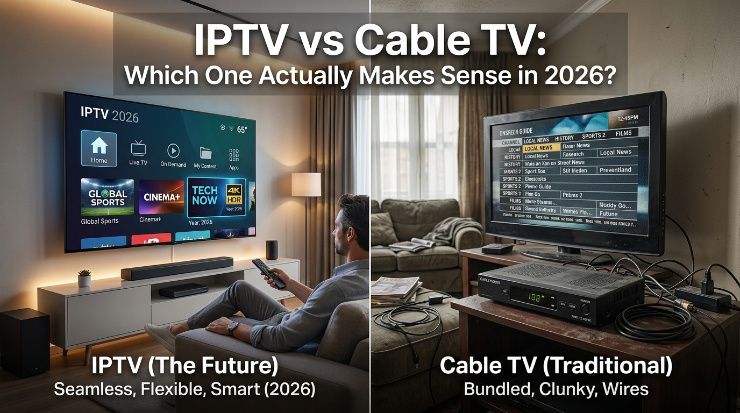
Cable TV used to be the only real option for live television, and switching away from it felt like a risk. That's changed considerably over the past few years as IPTV has matured into a genuinely viable alternative for most households. Whether it actually makes sense for you depends on a few specific factors that are worth weighing honestly rather than assuming one option is automatically better.
Cost Differences That Actually Matter
Cable TV packages in the US typically run anywhere from $80 to $150 per month once you factor in equipment rental, regional sports fees, and bundled add ons that get tacked onto the advertised base price. IPTV subscriptions generally cost a fraction of that, often between $10 and $20 per month for a comparable or larger channel selection.
The savings add up quickly over a year, but cost alone isn't the full picture. The value of any service depends on whether it actually delivers reliable access to the channels you watch, not just the headline price difference.
Channel Flexibility
Cable providers typically lock you into bundled packages where you pay for hundreds of channels to access the handful you actually watch regularly. IPTV services often include a broader range of channels by default without forcing you through tiered packages, which means more flexibility without the upsell structure cable companies are known for.
Reliability Is Where the Comparison Gets Complicated
Cable TV has one clear advantage that's worth being honest about, its delivery method through dedicated coaxial or fiber lines tends to be more consistently stable than internet based streaming, which depends entirely on your home internet connection and the IPTV provider's server capacity.
This means IPTV reliability varies considerably more than cable based on factors outside the broadcast itself, your internet speed, your router setup, and critically, the quality of your specific IPTV provider's infrastructure. A well resourced IPTV service can match or exceed cable reliability, but a poorly resourced one will struggle precisely during the moments that matter most, like a major live sports broadcast.
Device Flexibility and Multi Screen Viewing
IPTV has a clear advantage when it comes to watching across multiple devices and locations. Cable TV typically ties you to specific set top boxes in specific rooms, while IPTV works across smart TVs, phones, tablets, and streaming devices, often simultaneously depending on your subscription's connection limits. For households with varied viewing habits across different rooms and devices, this flexibility is a significant practical benefit.
Contract Terms and Commitment
Cable providers frequently require long term contracts with early termination fees, while IPTV services typically offer monthly options without long term commitment, alongside discounted rates for longer subscriptions if you choose them voluntarily. This makes IPTV considerably more flexible if your viewing needs or budget change.
What Actually Determines Which Is Better for You
If your internet connection is stable and reasonably fast, and you choose an IPTV provider with genuinely solid server infrastructure, IPTV typically delivers better value with comparable or superior reliability at a fraction of the cost. If your internet connection is unreliable or you've had bad experiences with budget IPTV providers specifically, cable's dedicated delivery method might still be the safer choice for your situation.
The deciding factor isn't IPTV versus cable as concepts, it's your specific internet setup combined with the specific IPTV provider's infrastructure quality, since that second variable swings the comparison considerably depending on which service you choose.
What to Test Before Switching From Cable
Before cancelling a cable subscription, test any IPTV provider thoroughly during a live sports broadcast, which is the scenario most likely to expose reliability gaps. Check your specific channels, test on your actual devices, and confirm your internet connection holds up consistently at the speeds required for HD or 4K streaming.
How PrimeTV Compares to Cable for US Households
PrimeTV is built specifically to close the reliability gap that makes some households hesitant to leave cable behind. The server infrastructure is designed to handle peak demand during major sports broadcasts, with over 30,000 live channels and more than 120,000 movies and series included at a fraction of typical cable pricing.
Multi device support means you can watch across your whole household without the room specific limitations cable imposes, and WhatsApp support provides fast responses if anything needs troubleshooting. Start a free trial with PrimeTV and test it directly against your current cable experience during a live event before making the switch.
The Bottom Line
IPTV has closed most of the gap with cable TV in terms of reliability, while clearly winning on cost and flexibility. The remaining question is provider quality, since a well built IPTV service competes confidently with cable while a poorly resourced one won't. Test thoroughly before switching, and the decision usually becomes straightforward.