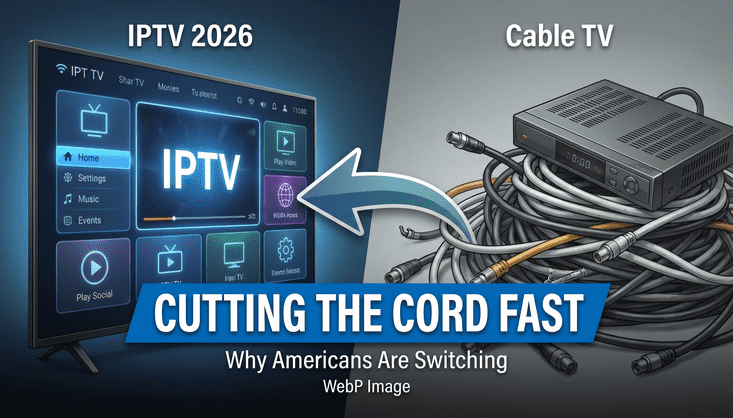
Cable TV had a good run but the numbers don't lie anymore
There was a time when cable was just what you had. You called the provider, a guy came to your house, drilled some holes, and handed you a remote with two hundred channels you mostly ignored. It worked and there wasn't really an alternative. That time is over. The iptv vs cable tv usa conversation has shifted dramatically in the last few years and in 2026 the comparison isn't even particularly close.
This isn't about being anti cable for the sake of it. It's about looking honestly at what you're paying, what you're getting, and whether that deal still makes sense when there are better options available. For most American households, it doesn't.
What cable actually costs when you add it all up
The advertised price for a cable package is rarely what you end up paying. The base rate looks reasonable until you add the equipment rental fee for the box, the regional sports surcharge, the broadcast TV fee, the DVR service charge, and whatever else the provider has decided to itemise separately this billing cycle. A package advertised at sixty dollars a month regularly lands at a hundred and twenty or more once everything is on the bill.
And that's before the introductory rate expires. Cable companies are famous for offering attractive first year pricing that quietly doubles when the promotional period ends. Most people don't notice until they actually check their bill one day and realise they've been paying significantly more than they thought for months.
The iptv vs cable cost reality is stark. A quality IPTV subscription in the US runs somewhere between eight and fifteen dollars a month with no equipment fees, no regional surcharges, no broadcast fees, and no introductory rate that jumps after twelve months. What you see is what you pay.
The channel count argument and why it matters less than you think
Cable packages love to advertise channel counts. Two hundred channels, five hundred channels. But be honest with yourself about how many of those you actually watch. Most people have somewhere between eight and fifteen channels they return to regularly. The rest are filler, shopping networks, obscure regional access channels, and duplicates of the same network in standard and high definition.
A switch to iptv usa gives you access to a genuinely enormous content library, but more importantly it gives you access to the right content. International channels that cable either doesn't carry or charges a premium add-on for. Every major US network. Sports coverage that doesn't require three separate packages. On-demand libraries with tens of thousands of titles. The volume is larger and the relevance is higher because you're not paying for a bundle built around what the cable company wants to sell you.
Sports is where cable loses the argument completely
If sport is the main reason you've held onto cable, this is worth paying close attention to. Getting comprehensive sports coverage through traditional TV in America is an expensive and frustrating exercise. NFL Sunday Ticket used to be a DirecTV exclusive and cost hundreds of dollars on top of a base package. NBA League Pass is a separate subscription. MLB.TV is another. Regional sports networks are bundled into mid-tier cable packages and blacked out for local games half the time anyway.
The best iptv alternative to cable handles sports completely differently. One subscription, one price, access to every major US sports network plus international sports channels covering football, cricket, rugby, Formula One, boxing, UFC and more. No blackouts based on your zip code, no separate subscriptions for different leagues, no paying extra for playoff coverage. It's a fundamentally different and better experience for anyone who watches sport regularly.
Flexibility that cable genuinely cannot match
Cable ties you to a physical location. The box is in your living room, which means that's where you watch. You can pay extra for a multi-room package and get additional boxes for other TVs in the house, each with their own rental fee attached. Watching on your phone or tablet while you're away from home is either not supported or requires a separate app that only works with certain packages.
IPTV works on every screen you own. Your TV via a Fire Stick or Android TV box, your phone, your tablet, your laptop. At home, at a hotel, visiting family across the country. The content follows you rather than being anchored to a piece of hardware in one room. For anyone with a busy life who doesn't always watch TV in the same spot, that flexibility alone is worth the switch.
Multiple simultaneous connections mean different people in the household can watch different things at the same time on different devices. No arguments about who gets the living room TV. No scheduling conflicts. Everyone watches what they want when they want it.
The contract situation
Cable contracts are one of the most complained about aspects of traditional TV. Two year agreements with early termination fees that can run into hundreds of dollars. Prices that change mid-contract because of rate adjustments buried in the terms. Equipment return processes that require you to physically drive to a store or ship a box back within a specific window or face charges.
Most quality IPTV providers operate month to month. You pay for a month, you get a month. If something changes in your life or you want to try a different service, you stop renewing. No phone calls to a retention department, no cancellation fees, no equipment to return. The relationship is just simpler and more honest on both sides.
Picture quality in 2026
This used to be a genuine advantage for cable. Early IPTV had compression issues and inconsistent quality that made it feel like a step down from a proper cable signal. That gap has closed significantly. A good IPTV provider running modern infrastructure delivers HD and 4K content that looks identical to or better than cable, partly because internet delivered video can use more efficient modern codecs than traditional broadcast standards.
The caveat is your internet connection. You need a stable connection with enough bandwidth for the quality level you want. Twenty five megabits per second is fine for HD. Fifty or more for 4K. Most American homes with a decent broadband package hit those numbers comfortably. If your internet is unreliable or slow, that'll affect your IPTV experience just like it affects everything else you do online.
Installation and setup compared
Getting cable installed means booking an appointment, waiting for a technician, and being home during a four hour window while someone runs cables through your walls. If you move house, you do it all again. If something breaks, you wait for another appointment.
Setting up IPTV takes about ten minutes and you do it yourself. Plug in a Fire Stick, install an app, enter your credentials. That's the whole process. No appointment, no technician, no waiting. If you move, you take the Fire Stick with you and it works exactly the same in the new place. There's genuinely nothing complicated about it.
Making the switch without the stress
A lot of people hold off on cutting the cord because change feels complicated even when the logic for doing it is obvious. The practical reality is that switching to IPTV is one of the lower friction changes you can make to your home setup. You're not giving anything up in terms of content. You're gaining flexibility, saving money, and getting a better experience on more devices.
If you want to see what the alternative actually looks like before committing, start with a trial. Test it on your TV, your phone, during a live sports event. See how it handles the content you care about most. The evidence tends to be pretty convincing. When you're ready to make the move, check out the current Prime TV plans here and pick the option that fits your household.
Cable had its moment. But paying more for less flexibility, fewer devices, and a worse overall experience in 2026 is a hard thing to justify when a genuinely better option is sitting right there.